

Interactive Circle of Fifths
Master music theory with the Interactive Circle of Fifths, your go-to tool for jamming scales and chords effortlessly.
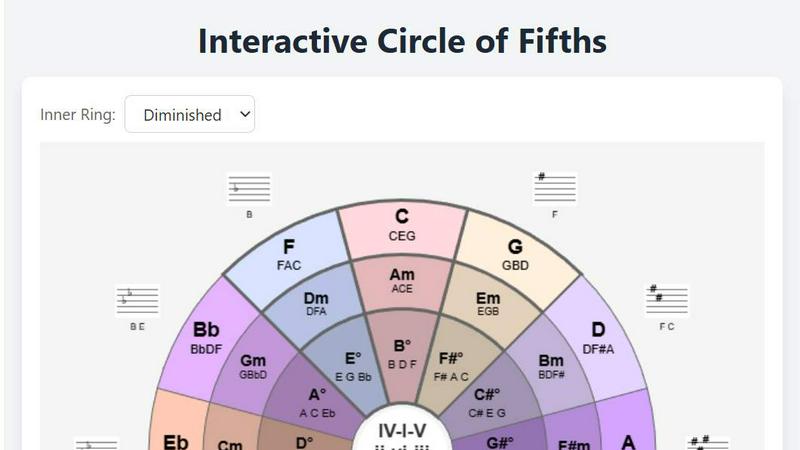
About Interactive Circle of Fifths
Alright, fam, let’s break it down. The Interactive Circle of Fifths is like your best buddy who knows all the secrets to music theory without making you feel like you're stuck in a boring lecture. This bad boy isn’t just a dusty old chart; it’s a vibrant, interactive tool that allows you to click, play, and explore the connections between chords and keys. Whether you’re a total newbie trying to strum your first chord or a seasoned musician looking to level up your skills, this tool is your musical playground. Imagine clicking on a chord like C or F#m and instantly hearing how it fits in the grand scheme of things. It demystifies music theory by making it visual and auditory, so you can finally see and hear how everything connects. Forget the confusion; this tool turns "ugh, theory" into “ohhh, THAT'S how it works!" It’s perfect for songwriters, musicians, and anyone who just wants to understand music better.
Features of Interactive Circle of Fifths
Fully Interactive Interface
The Interactive Circle of Fifths isn't your grandma's static chart. It's a fully clickable and playable interface that brings music theory to life. Just click on any chord, and boom, you get instant auditory feedback that shows you how it relates to other chords. This interactive approach makes learning fun and engaging, like a video game for musicians!
Visual Chord and Key Connections
With its vibrant design, the Circle of Fifths visually maps out the relationships between different chords and keys. You can easily see how each chord connects, making it way easier to understand progressions and transitions. No more guessing games; just clear visuals that make theory a piece of cake.
Versatile Instrument Support
This tool isn’t just for one type of instrument. Whether you're rocking a guitar or tickling the ivories on a piano, the Interactive Circle of Fifths has got you covered. You can switch between instruments, helping you explore how chord progressions sound differently across various platforms.
Customizable Learning Experience
Tailor your journey through music theory! The Interactive Circle of Fifths allows you to experiment with different scales, like the Pentatonic or Blues Scale, and even includes a harmonized scale feature. This customization means you can focus on what interests you most, whether it’s songwriting, improvisation, or simply understanding the theory behind your favorite jams.
Use Cases of Interactive Circle of Fifths
Songwriting Made Easy
If you're struggling to write songs, this tool is your new best friend. Use the Interactive Circle of Fifths to find chord progressions that flow well together. Just click around and explore combinations until you find that perfect vibe for your next hit.
Learning Music Theory
For those who dread the thought of studying theory, this tool is a game-changer. It makes music theory accessible and fun, allowing you to learn at your own pace. No more boring textbooks; just click, listen, and learn!
Jamming with Friends
Planning a jam session? The Interactive Circle of Fifths can help you figure out what chords to play next, making it super easy to keep the groove going. Just pull it up, and you and your friends can experiment with new sounds and progressions on the fly.
Breaking Down Your Favorite Songs
Ever wonder how your favorite tracks are structured? Use the Interactive Circle of Fifths to analyze the chords and keys in those songs. It’s like having a backstage pass to understanding why those melodies hit you right in the feels.
Frequently Asked Questions
What is the Circle of Fifths?
The Circle of Fifths is a visual representation that shows the relationships between different keys and chords in music. It helps musicians understand how to navigate through scales and chord progressions.
Can I use this tool on my phone?
Yes! The Interactive Circle of Fifths is designed to be mobile-friendly, so you can access it from your smartphone or tablet. Perfect for on-the-go music exploration!
Is this tool suitable for beginners?
Absolutely! The Interactive Circle of Fifths is perfect for beginners and experienced musicians alike. Its interactive nature makes learning music theory straightforward and enjoyable.
How does the sound feature work?
When you click on a chord or key within the Circle, it plays the corresponding sound. This auditory feedback helps you understand how different chords relate to one another, making it easier to grasp musical concepts.
Explore more in this category:
Similar to Interactive Circle of Fifths


Delta Report
Free, Live 3D Satellite, Space Weather & Climate Tracker in real time on an interactive globe alongside articles and insights.

The French Corner
Learn French through visual stories told by a native speaker. Words you meet come back on their own, right before you'd forget them.


YT Video Summarizer
Turn Long YouTube Videos into Quick AI Summaries in Seconds.

AI Image Remover
AI Image Remover is a free browser tool for erasing people and objects from photos. Upload an image, brush a mask over the distraction