
Blueberry vs CloudBurn
Side-by-side comparison to help you choose the right AI tool.

Blueberry
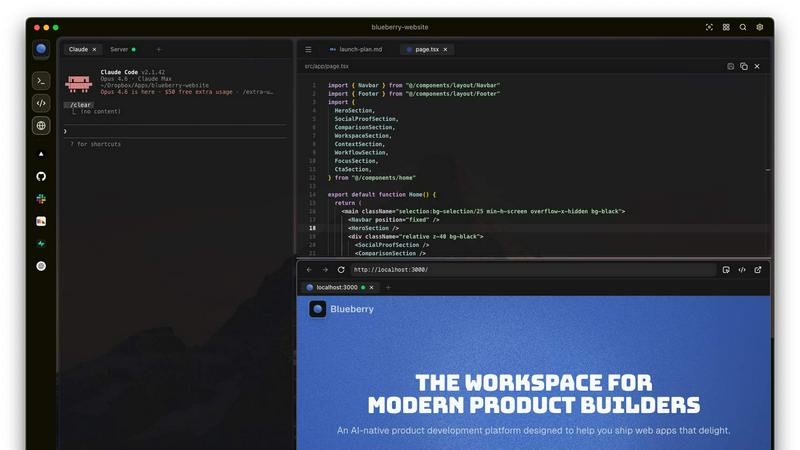
Blueberry is your AI-native Mac workspace that merges your editor, terminal, and browser so your AI sees everything.
Last updated: February 28, 2026

CloudBurn
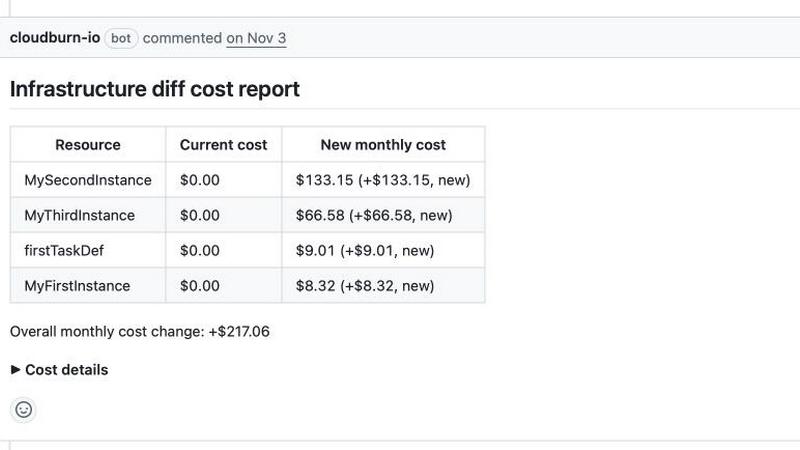
Stop AWS bill shock by seeing your cloud costs right in your pull requests.
Last updated: February 28, 2026
Visual Comparison
Blueberry
CloudBurn
Feature Comparison
Blueberry
The All-in-One Focused Workspace
This is the main event. Blueberry kills app-switching fatigue by giving you a legit code editor, a fully functional terminal, and a live preview browser all in one tidy, draggable window. It's not just them slapped together; they're designed to feel like they were always meant to be one tool. You get full syntax highlighting, multi-cursor editing, find/replace, and Git integration in the editor—no compromises. The terminal runs your models and commands, and the browser shows a real-time preview of your app. It's your entire dev loop, unified.
Blueberry MCP (Full Context for Your AI)
This is the secret sauce that makes the AI in Blueberry actually useful. The built-in MCP (Model Context Protocol) server is a game-changer. It lets your connected AI (Claude, Codex, etc.) see and interact with your entire workspace context live. We're talking the code you have open, the output in your terminal, what's currently rendering in the preview browser, and even your pinned apps. Your AI assistant finally has the full picture, so you can ask "how does this route work?" or "why is this button broken?" without manually feeding it a million snippets.
Pinned Apps for Constant Context
Why stop at just dev tools? Blueberry lets you dock your other essential apps—like GitHub, Linear, Figma, or PostHog—right inside your workspace. They load up with your project and, crucially, share their context with your AI via MCP. Need your AI to reference a specific Linear ticket or a Figma frame? It's already there, in the loop. It turns your workspace into the central hub for everything related to your product, not just the code.
Visual Context with Screenshot & Element Select
Sometimes you need to show, not tell. Blueberry's preview browser comes with built-in tools to give your AI visual context. You can capture screenshots of your app or, even cooler, directly select specific HTML elements from the preview. This means you can point at a busted component and ask your AI to fix it, and it knows exactly what you're talking about. It bridges the gap between the visual front-end and the code in a way that feels like magic.
CloudBurn
Real-Time PR Cost Commentary
Forget waiting for the monthly invoice to get roasted. CloudBurn's bot jumps into your GitHub pull requests the second there's a diff, automatically posting a detailed cost breakdown. It shows you exactly what's new, what's changed, and—most importantly—how much it's gonna cost you per month. It's like having a super-smart, cloud-pricing-obsessed teammate commenting on every PR, keeping everyone honest before the merge button is even clicked.
Terraform & AWS CDK Native Integration
CloudBurn doesn't ask you to learn some new funky syntax or overhaul your entire process. It works with the tools you're already using. Just hook up the provided GitHub Action for your Terraform plan or AWS CDK diff output, and you're golden. It speaks the language of infrastructure-as-code, so you get accurate estimates based on your actual configs, not just guesses.
Automatic & Always-Up-to-Date Pricing
Manually looking up AWS prices is a snooze-fest and outdated almost immediately. CloudBurn's engine is wired directly into the latest AWS pricing data. Whether it's On-Demand instances, Fargate tasks, or funky new services, the cost estimates are based on real, current prices for your specific region. No more nasty surprises because you used last year's spreadsheet.
Catch Catastrophic Misconfigs Early
This is the big one. CloudBurn is your early warning system for those "oh-crap" moments. That accidentally-provisioned x1e.32xlarge instance? The S3 bucket set to replicate globally? CloudBurn will flag it with a giant dollar sign in your PR, giving you a chance to say "whoa, NOPE" and fix it before it costs you a down payment on a car. It turns costly blunders into minor code corrections.
Use Cases
Blueberry
Rapid Prototyping & Iteration
You're building an MVP and need to move at light speed. With Blueberry, you can write a component in the editor, see it update live in the preview browser, debug an error in the terminal, and ask your AI to refactor the logic—all without leaving the window. The tight feedback loop and constant AI context turn hours of work into minutes, letting you experiment and iterate on ideas before your coffee gets cold.
AI-Powered Debugging & Pair Programming
Hit a gnarly bug or a confusing error message? Instead of scouring Stack Overflow alone, you can have your AI model, armed with the full context of your running app, terminal logs, and relevant code files, help you diagnose it in real-time. It's like having a senior engineer looking over your shoulder who never gets tired and has perfect memory of your entire codebase.
Streamlined Full-Stack Development
Working on a full-stack web app means constantly context-switching between server code, client code, and the database. Blueberry simplifies this by keeping your API route code, your frontend component, and the resulting web page preview visible simultaneously. You can run your backend server in one terminal tab, your frontend dev server in another, and see how they interact live, making API integrations and data flow way easier to reason about.
Cross-Device Preview & Responsive Design
Building a modern app means it has to look good on every screen. Blueberry's preview browser has desktop, tablet, and mobile viewports built right in. You can instantly see what your users will see on different devices without needing to grab your phone or open a separate emulator. It makes responsive design checks a seamless part of your regular coding flow.
CloudBurn
The "Oops, I Built a Gold-Plated Dev Environment"
Every dev has done it: spun up a beastly instance "just for testing" and forgotten about it. With CloudBurn, when a dev opens a PR to add a c5n.18xlarge to the dev cluster, the entire team sees the $3,000/month price tag right there. It sparks the "do we really need that?" conversation instantly, preventing resource sprawl and keeping dev costs from going supernova.
The Safe & Informed Infrastructure Upgrade
You need to upgrade your database for better performance. Is moving from db.t3.medium to db.r5.large going to add $50 or $500 to the bill? Instead of guessing or wasting time modeling, your upgrade PR comes with a CloudBurn report showing the exact cost delta. This lets you make data-driven decisions and get approval without the financial ambiguity.
Enforcing FinOps Culture from the Ground Up
Trying to get engineers to care about cloud costs is tough without the right tools. CloudBurn bakes cost visibility directly into the developer's natural habitat—the PR. It makes cost accountability a standard part of the review checklist, right alongside linting and unit tests. This builds a culture of cost-aware engineering without the annoying nagging.
Preventing Production Bill Shock from Code Reviews
A junior engineer submits a change that adds an auto-scaling group. The code looks fine, but the CloudBurn report reveals it's configured to scale out to 50 massive instances under minimal load. The team catches this $15k/month risk in the review, comments on it, and adjusts the scaling policy. Crisis averted, bill protected, hero status achieved.
Overview
About Blueberry
Alright, let's break it down. Blueberry is that one app you didn't know you needed until you try it and then you can't imagine your workflow without it. It's basically a super-powered, AI-native workspace built specifically for macOS that smashes your code editor, terminal, and live preview browser into one single, focused window. No more frantic Alt-Tabbing between a dozen different apps, losing your train of thought, or wasting brain cycles on window management. It's built for the modern product builder—the devs, founders, and indie hackers who are shipping web apps and need to move fast without the tooling friction. The core vibe? Stop copy-pasting context for your AI. Blueberry connects to your favorite models (Claude, Gemini, Codex, you name it) via MCP and gives them a live feed of your entire project: your open files, your terminal output, and even what's rendering in the browser preview. It's like giving your AI pair programmer a super-high-resolution screen share of your mind. And the best part? It's 100% free during the beta. So if you're tired of the juggle, this is your invite to a smoother, more integrated way to build.
About CloudBurn
Alright, let's talk about the cloud bill monster that's been giving your team nightmares. You know the drill: you merge a PR, your Terraform or AWS CDK stack does its thing, and you're feeling like a DevOps wizard. Then the end of the month hits, and BAM! Your AWS bill looks like it got hit by a freight train. Where did that extra $5K come from? Was it the new RDS instance? The accidentally public S3 bucket? It's a mystery that ruins your day and your budget. CloudBurn is here to be your financial bodyguard. It's the tool that slaps a price tag on your infrastructure code before it ever touches production. By integrating directly into your GitHub pull requests, it gives you and your team a real-time, line-by-line cost estimate of every change. Think of it as a crystal ball for your cloud spend, letting you catch those "oopsie" $10,000 configurations while they're still just code in a review. No more spreadsheet sorcery or post-deployment panic attacks. CloudBurn makes cost awareness a natural part of the dev workflow, so you can build with confidence and keep your finance team from having a meltdown.
Frequently Asked Questions
Blueberry FAQ
Is Blueberry really free?
Heck yes! Blueberry is 100% free during its beta period. The team is focused on building an amazing tool and getting it into the hands of builders. There's no credit card required to download and use it. Just grab it and start building.
What AI models does Blueberry work with?
Blueberry is super flexible. It can connect to any AI model that supports the Model Context Protocol (MCP). This includes popular ones like Anthropic's Claude, Google's Gemini, and OpenAI's Codex. You're not locked into one ecosystem; you can use the model that works best for you and your project.
Is Blueberry only for web development?
While it's optimized for building web applications (thanks to the integrated live preview browser), the core workflow of an editor, terminal, and AI with full context is useful for many types of software development. However, its sweet spot is definitely developers and product builders working on web-based projects.
Is it available for Windows or Linux?
Not yet, fam. Currently, Blueberry is a macOS-only application. It's built as a native Mac app to deliver the best possible performance and integration. The team might consider other platforms in the future, but for now, you'll need a Mac to join the party.
CloudBurn FAQ
How does CloudBurn actually work?
It's pretty slick! You install our GitHub App and add a simple GitHub Action to your repos. This action runs when a PR is opened, captures the output of your terraform plan or cdk diff, and sends it securely to CloudBurn. Our engine analyzes the resource changes, fetches the latest AWS prices, does the math, and then our bot posts the itemized cost report back as a comment on your PR. All in a matter of seconds.
Is my code or cloud credentials safe with CloudBurn?
Totally. We take security super seriously. CloudBurn is a verified GitHub App, which means it follows strict security protocols. We never ask for or store your AWS credentials. The setup and billing are 100% handled through GitHub. We only see the planned resource changes from your diff or plan output—not your actual live infrastructure or secrets.
What if my estimates are wrong? Are they guaranteed?
We provide estimates based on the official AWS public pricing API and standard assumptions (like 730 hours/month for running instances). They are incredibly accurate for On-Demand resources. However, they're estimates—actual bills can be affected by real usage, discounts (like Savings Plans), or data transfer fees we can't predict from a config file. Think of it as the manufacturer's sticker price; it tells you the base cost before you drive it off the lot.
Can I use CloudBurn for free?
Yes! We have a Community plan that's free forever for public repositories. For private repos, you can start with a 14-day free trial of our Pro features, which includes unlimited cost reports on private repos. After the trial, you can choose to subscribe to Pro or drop back to the free Community tier, which has limits but lets you keep using the core functionality. No credit card is needed to start the trial.
Alternatives
Blueberry Alternatives
So you've heard the buzz about Blueberry, the slick Mac app that smashes your editor, terminal, and browser into one hyper-focused workspace. It's basically the ultimate power-up for devs and AI tinkerers, letting you connect models like Claude or Codex so they can see your entire workflow at a glance. No more frantic alt-tabbing or copy-pasting context—just pure, unadulterated flow. But let's be real, the hunt for the perfect tool is a whole vibe. Maybe you're not on macOS and need something that plays nice with your Windows or Linux setup. Perhaps the feature set doesn't quite match your specific grind, or you're just curious what else is cooking in this space. It's all good—exploring your options is how you find your perfect match. When you're scouting for something similar, keep your eyes peeled for a few key things. First, check what platforms it runs on. Then, dig into how it handles AI integration—can you plug in your favorite model? Finally, scope out the workflow: does it genuinely unify your tools, or is it just another window manager in a fancy jacket? Your stack deserves the best fit.
CloudBurn Alternatives
Alright, so you're vibing with the whole "dodge the AWS bill shock" concept that CloudBurn is serving up. It's a total lifesaver for devs using Terraform or AWS CDK, basically acting as a financial bodyguard for your pull requests. It lives in that sweet spot of FinOps and DevTools, automating cost estimates right in your GitHub workflow so you don't deploy a money pit. But hey, maybe you're scoping out the scene. People peek at alternatives for all sorts of reasons—maybe the pricing structure doesn't fit your squad's size, you need support for a different cloud provider, or your CI/CD setup is built somewhere other than GitHub. It's all about finding the right fit for your stack and your budget. When you're on the hunt, you gotta weigh what matters most to you. Think about the depth of the cost breakdowns, how smoothly it plugs into your existing tools, and whether it gives you real-time pricing or just ballpark guesses. The goal is to keep those nasty billing surprises in the rearview, no matter which tool you roll with.