
ButterflAI vs Video Database
Side-by-side comparison to help you choose the right AI tool.

ButterflAI
Stop wasting time on listings, just drop a pic and get a full SEO-ready product page in seconds.
Last updated: February 28, 2026

Video Database
Monitors and organizes high-value creator videos.
Visual Comparison
ButterflAI

Video Database
Overview
About ButterflAI
Alright, listen up, e-commerce hustlers. Tired of the endless, soul-crushing grind of creating product listings? You know the drill: writing the same description for the 50th time, begging your designer for one more image variant, and trying to decode SEO like it's ancient hieroglyphics just to get seen. Enter ButterflAI, your new AI-powered hype-man for your entire product catalog. This tool is built for Shopify stores and brands drowning in SKUs but starving for good content. Its whole vibe is taking whatever sad, little product data you've got (yes, even that one mediocre photo from your phone) and transforming it into a full-blown, conversion-ready asset pack. We're talking killer titles, descriptions that actually sell, SEO meta-stuff that makes Google swoon, AND a whole suite of visuals—from clean product shots to lifestyle images and even short, scroll-stopping videos. It keeps your brand voice consistent across thousands of products, flags where your listings are weak, and auto-optimizes over time. The result? You launch products faster than a sneaker drop, look pro across your entire site, and rank better without needing to hire an army of specialists. It's basically cheat codes for scaling your store's content game.
About Video Database
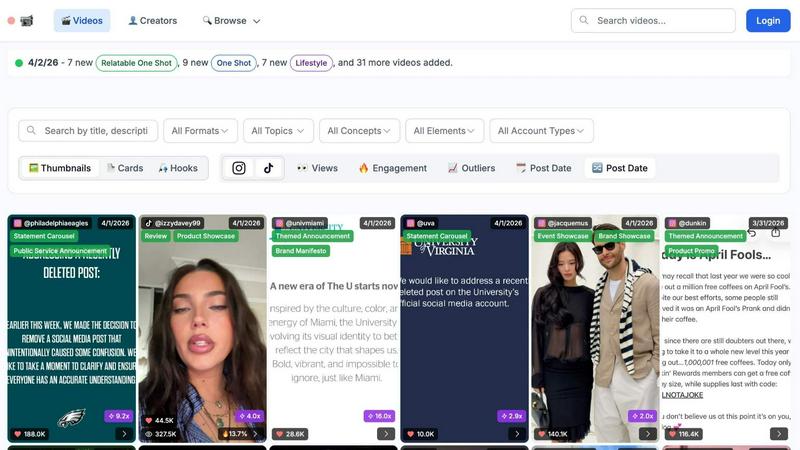
The Video Database began as an internal solution to a common frustration: as creators and content strategists we need to "study the best," but this typically means endless scrolling through social platforms riding the algo waves - good or bad. Nobody needs more of that.
Cut30, our short-form video bootcamp, maintains hundreds of hand-curated reference videos throughout its curriculum—valuable examples embedded within tutorials, exercises, and lessons. However, these references were scattered across the platform without centralized organization or analysis. What started as simply organizing and categorizing those videos, was a slippery slope.