
CloneUI vs Postproxy
Side-by-side comparison to help you choose the right AI tool.

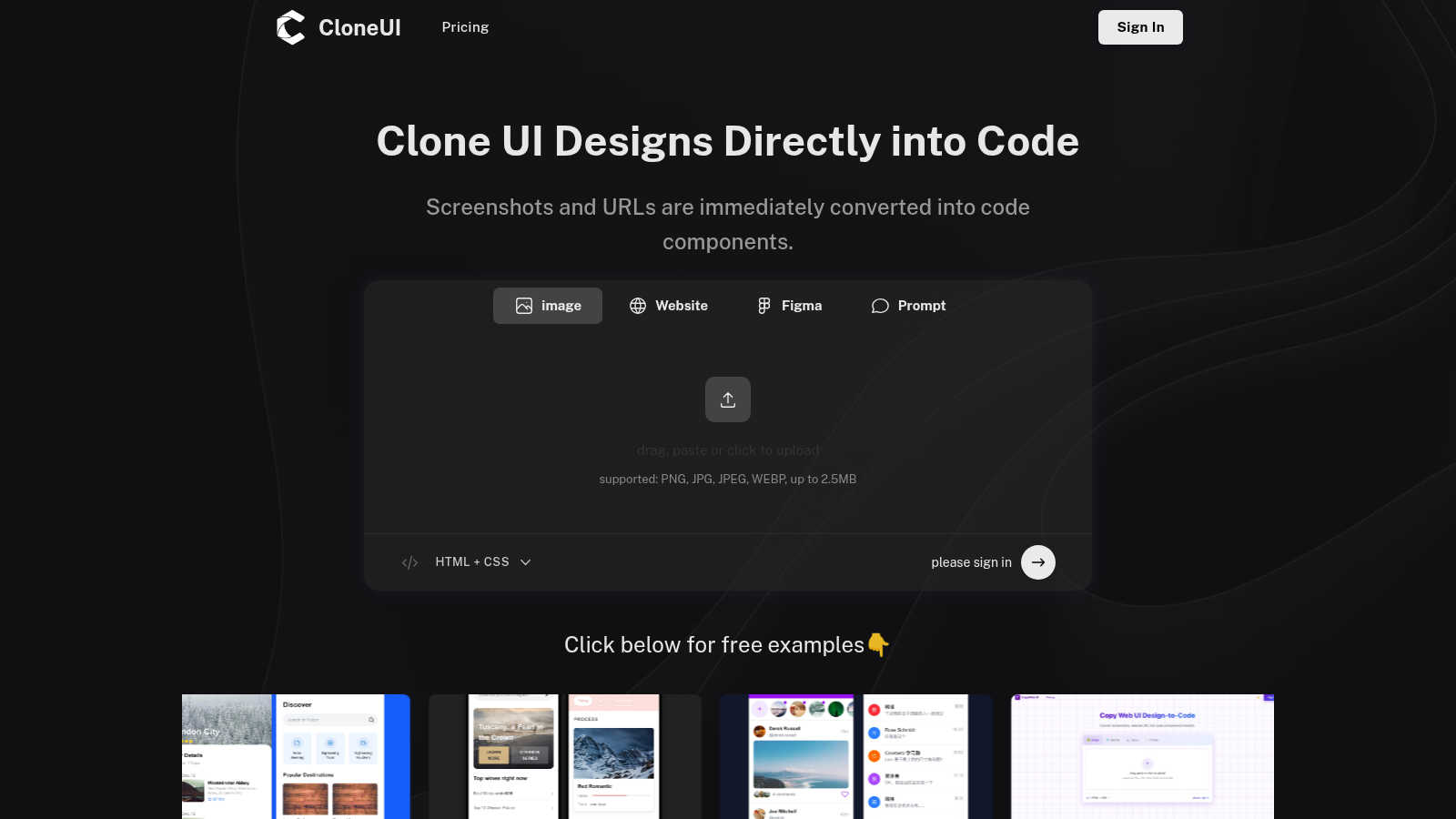
CloneUI turns website screenshots or URLs into ready-to-use React, Vue, or HTML code in seconds, no sweat!.
Last updated: March 1, 2026

Postproxy
Stop the social media API chaos and publish everywhere with one simple, bulletproof call.
Last updated: February 28, 2026
Visual Comparison
CloneUI
Postproxy
Feature Comparison
CloneUI
URL to Code Cloning
With CloneUI, you can effortlessly clone entire website structures just by throwing in a URL. No more guesswork—just paste the link and watch as CloneUI does its magic, generating all the necessary code components in mere seconds.
Screenshot to Code Conversion
Got a design screenshot that’s calling your name? Simply upload it, and CloneUI will whip up pixel-perfect code faster than you can say "HTML." This feature is perfect for turning those design dreams into reality without breaking a sweat.
Figma to Code Transformation
Designers, rejoice! With CloneUI's one-click Figma to code conversion, you can instantly transform your Figma designs into production-ready code. No more manual labor—just upload your design, and let CloneUI take care of the rest.
Intelligent Component Recognition
CloneUI flexes its AI muscles with intelligent component recognition. It automatically identifies UI elements in your design and maps them to code, ensuring that every detail is captured perfectly. This means less time fiddling with code and more time focusing on creating epic designs.
Postproxy
The Unified API Endpoint
This is the whole vibe. One single API call to rule them all. You stop worrying about whether Instagram wants a square video or if LinkedIn has a character limit today. You just send your post, pick your platforms (like ["instagram", "linkedin"]), and attach your media. Postproxy takes that and does all the dirty work of talking to each platform in their own special language, so you don't have to learn five different dialects of API nonsense. It's the ultimate simplification.
Automated OAuth & Token Management
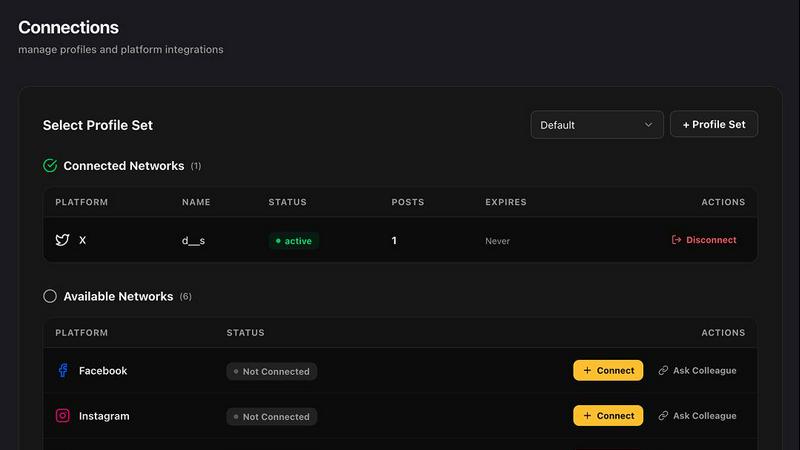
The absolute worst part of any integration? The auth dance. App reviews, permission scopes, tokens that expire at 3 AM—it's a bureaucratic hellscape. Postproxy becomes your auth guardian. You connect your social accounts once, and it handles all the token storage, refresh cycles, and re-authentication silently in the background. You just use your Postproxy API key forever. No more midnight panic because a token died.
Built-in Failure Handling & Retries
Social platform APIs are flaky. Rate limits hit you out of nowhere, quotas mysteriously vanish, and posts fail silently. Postproxy is built expecting this chaos. It automatically handles rate limits with smart backoffs, retries failed publishes, and is fully aware of platform quotas. Most importantly, it gives you explicit, clear statuses on what succeeded, what failed, and why. No more manual detective work.
Content Adaptation & Format Conversion
You can't just blast the same raw text and video everywhere. Instagram needs specific aspect ratios, X has a link card thing, YouTube wants a description. Postproxy acts as your content shape-shifter. It automatically transforms and optimizes your post body, titles, and media to match the requirements and best practices of each destination platform, maximizing your chances of a successful publish without you lifting a finger.
Use Cases
CloneUI
Rapid Prototyping
Need a prototype for your project but short on time? CloneUI lets you quickly convert designs into functional code, allowing you to showcase your ideas in a snap. Impress your team or clients with speedy iterations that keep the creative juices flowing.
Client Project Development
Stop wasting hours on manual coding for client projects. With CloneUI, you can turn client designs into clean, production-ready code in no time. This means you can meet deadlines without sacrificing quality and keep your clients happy.
Learning and Deconstructing
Ever wanted to learn how a specific website works? Use CloneUI to clone your favorite sites and dig into the code. It's a hands-on way to learn coding best practices and understand how different design elements come together.
Design Handoff Made Easy
Designers and developers can finally speak the same language. CloneUI simplifies the design handoff process by providing developers with ready-to-use code. This means fewer miscommunications and a smoother workflow for everyone involved.
Postproxy
The AI Content Firehose
You've got LLMs or AI agents pumping out brilliant content 24/7, but then the publishing step breaks the whole flow. Postproxy slots right in as the final, reliable delivery layer. Generate your post with AI, send it straight to the Postproxy API, and watch it flow out to all your social channels without you having to manually tweak the format for each one. It turns AI generation into a fully automated publishing pipeline.
Multi-Client/Agency Social Management
Managing posts for a dozen different clients or brand accounts is account sprawl madness. With Postproxy, you connect all those different Facebook Pages, Instagram profiles, and LinkedIn company pages once. Then, from your central dashboard or API, you can publish to any combination of them with a single request, keeping access control and logging clean and centralized. Scaling client work becomes trivial.
n8n/Zapier Automation Workflows
You're building killer automations in n8n or Zapier that trigger on events—like a new blog post, a product update, or a calendar alert. The workflow runs perfectly until the "Publish to Social" step, which requires five different, fragile integrations. Replace that whole tangled mess with one robust Postproxy step. It makes your automations actually reliable from start to finish.
CI/CD for Social Content
For the devs who want to treat content like code. You can store post copy and assets in your repo, and use CI/CD pipelines to schedule and deploy social updates. Postproxy's API fits perfectly into this model, allowing you to trigger publishes via scripts or pipeline jobs. It brings software engineering best practices—version control, rollbacks, and automated deployments—to your social media strategy.
Overview
About CloneUI
Alright, let's get real. CloneUI is your new coding BFF, designed to zap away the tedious grind of turning killer designs into actual code. You know that feeling when you come across a stunning website or have a Figma design that’s just begging to be built, but the thought of coding it from scratch makes you want to binge-watch your favorite show? Enter CloneUI! This AI-powered tool lets you clone website designs like a wizard. Just drop a screenshot or a URL, and boom! You’re gifted with clean, responsive, production-ready HTML, CSS, or even framework-specific code for React or Vue. It's like having a magic wand for your design-to-code journey. Tailored for designers and developers who are all about speed and efficiency, CloneUI lets you skip the boring parts of coding. Whether you're whipping up prototypes, tackling client projects, or just deconstructing a cool site for fun, CloneUI gives you a massive head start. No more staring blankly at a code editor—just throw in a visual and let the AI take the wheel, so you can focus on creating awesomeness!
About Postproxy
Alright, let's cut through the noise. Postproxy is the single API that finally makes social media publishing not a total nightmare. Think of it as the universal translator and bouncer for your content, handling the messy, platform-specific drama so you don't have to. It's built for devs, automators, and anyone who's tired of juggling a dozen different API keys, OAuth flows, and random rate-limit errors from Instagram, Facebook, YouTube, LinkedIn, and X. Instead of writing and maintaining a mountain of custom code for each platform's ever-changing rules, you just send one clean request to Postproxy. It does all the heavy lifting: automates the boring auth stuff, handles rate limits and retries like a champ, magically adapts your content to fit each platform's weird quirks, and gives you clear analytics. It turns the chaotic, unreliable mess of multi-platform posting into predictable, boringly reliable infrastructure. Whether you're building in n8n, Zapier, with LLMs, or in your CI/CD pipeline, Postproxy is the missing piece that makes "set it and forget it" publishing actually possible. Oh, and there's a free plan to get you started. Basically, it's the cheat code for social media automation.
Frequently Asked Questions
CloneUI FAQ
Which input formats are compatible with CloneUI?
CloneUI supports various image formats, including PNG, JPG, JPEG, and WEBP, with a maximum file size of 2.5MB. So go ahead and upload those design screenshots without worrying about compatibility issues.
How is the code generated?
The magic happens when you upload a screenshot or paste a URL. CloneUI's AI analyzes the visual elements and instantly generates clean, responsive code, tailored to your preferred framework or plain HTML/CSS.
Supported frameworks?
CloneUI allows you to export your code to popular frameworks such as React and Vue, in addition to standard HTML and CSS. This flexibility means you can work in your favorite environment without a hitch.
Is the generated code customizable?
Absolutely! The generated code is not just a one-size-fits-all deal. You can tweak and customize it to fit your specific needs, ensuring that your final product is exactly how you envisioned it.
Postproxy FAQ
What platforms does Postproxy support?
Right now, Postproxy handles the big players where publishing is most complex: Instagram, Facebook, YouTube, LinkedIn, and X (formerly Twitter). The whole idea is to cover the platforms with the most bureaucratic APIs and weird rules, giving you one smooth interface for all of them.
How does Postproxy handle media like images and videos?
You just provide the public URLs to your media files (like from S3, Cloudinary, etc.) in your API request. Postproxy's backend then downloads, processes, and reformats that media as needed for each specific platform's requirements—things like resizing, transcoding video, or generating thumbnails—before uploading it directly to the social network.
Is my data and access secure with Postproxy?
Totally. Postproxy acts as a secure proxy. Your API key and requests are encrypted in transit. For platform access, it uses official OAuth flows, so you're granting permission directly to Postproxy's secure app. It stores only the necessary tokens (encrypted) to perform actions on your behalf and never stores your social account passwords.
What happens if a platform's API changes or breaks?
This is a core part of Postproxy's value. Their team monitors all the supported platform APIs obsessively. When Instagram or LinkedIn rolls out a breaking change, Postproxy updates its internal adapters so your integration stays stable. You maintain one constant API contract with Postproxy, and they deal with the shifting sands of the social platforms for you.
Alternatives
CloneUI Alternatives
CloneUI is your go-to tool for transforming website designs into functional code at lightning speed, sitting snugly in the Design Tools and Development categories. Users often seek alternatives to CloneUI when they want different pricing options, specific feature sets, or compatibility with various platforms that fit their unique workflows. The quest for the perfect alternative usually hinges on factors like ease of use, the quality of generated code, and the ability to integrate with existing projects without hassle. When on the hunt for an alternative, you should consider what coding frameworks you need support for, how intuitive the interface is, and the overall flexibility of the tool. It’s essential to weigh how well the alternative can handle your design files, whether it’s screenshots or URLs, and if it can deliver the clean, responsive code that keeps your projects thriving.
Postproxy Alternatives
Postproxy is your social media API wingman, part of the design and automation toolkit that helps devs and creators post everywhere at once. It’s the one-stop shop for blasting your content to all the major platforms without getting lost in a maze of different developer portals. People hunt for alternatives for all sorts of reasons. Maybe the pricing doesn’t fit their current hustle, they need a specific niche feature, or they just vibe better with a different UI. It’s all about finding the right tool that clicks with your workflow and budget. When you’re scoping out other options, keep your eyes on the prize. Check what platforms they actually support, how they handle the boring but crucial stuff like auth and errors, and if they play nice with your other tools like n8n or Zapier. Don’t just chase the shiniest logo; make sure it actually solves your headaches.