
Jottler vs Patrivox
Side-by-side comparison to help you choose the right AI tool.

Jottler
Jottler is your hands-off SEO buddy, automating research, writing, and publishing to boost your organic traffic effortlessly.
Last updated: March 26, 2026

Patrivox
Stop wasting hours in dusty archives, let AI read and connect everything so you can search it all in seconds.
Last updated: March 4, 2026
Visual Comparison
Jottler
Patrivox
Feature Comparison
Jottler
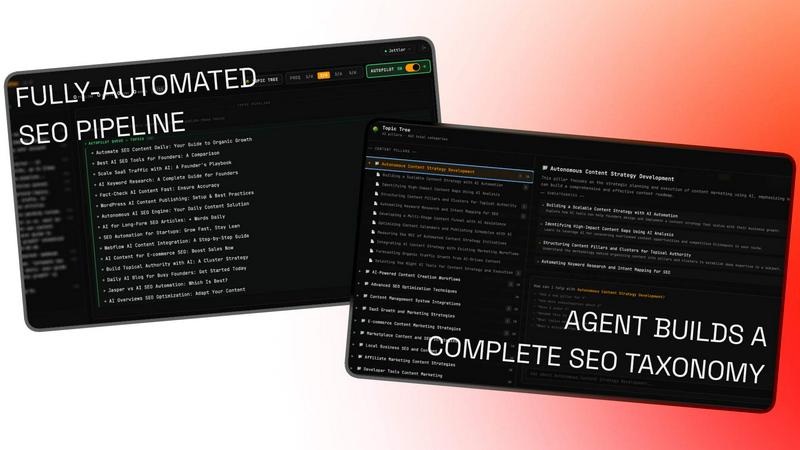
Fully Automated SEO Content Pipeline
Jottler runs a fully automated content pipeline, which means it continuously discovers keyword opportunities, plans engaging topics, and generates optimized articles for your blog without you lifting a finger. It's like having a dedicated SEO team working around the clock.
AI-Powered Keyword Research & Content Planning
Say goodbye to guesswork! Jottler uses AI to identify high-value search opportunities tailored to your niche. It builds a long-term content strategy that aligns with your business goals, helping you stay ahead of the competition effortlessly.
Direct CMS Publishing
No more manual labor! Jottler allows you to publish articles directly to your favorite CMS platforms like Webflow and WordPress. Just set it up, and watch as content gets auto-published, letting you kick back and relax.
Rich, Structured Content
Each article produced by Jottler is packed with everything you need for optimal engagement: images, formatting, internal links, tables, and an SEO-optimized structure. It's not just about quantity; the quality is top-notch too, ensuring your readers stick around.
Patrivox
Automation: The "Set It & Forget It" Magic
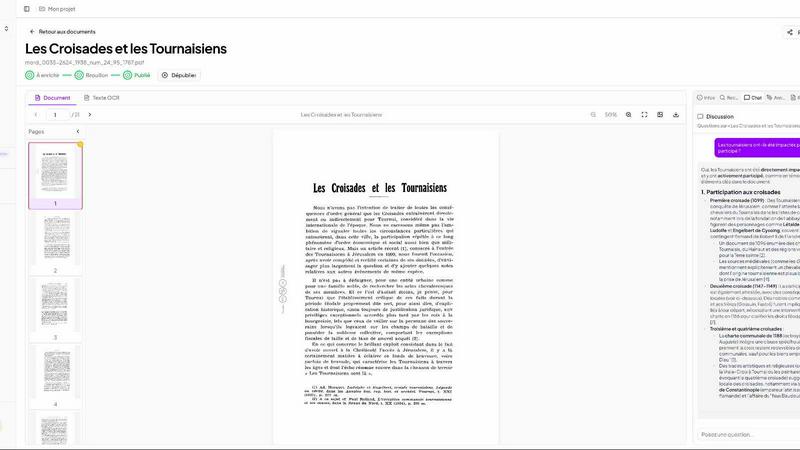
This is the core vibe. You literally drag and drop your PDFs, hundreds at a time if you want. Then, you just vibe while Mistral AI's next-level OCR reads every single page. It automatically pulls out all the important entities (people, places, orgs, dates) and enriches the metadata. Zero manual entry, zero fuss. It's like an autopilot for digitizing your entire collection, making it searchable in minutes, not months.
Search: Your Google for History
Forget Ctrl+F through one doc at a time. This is instant, full-text search across your ENTIRE archive. It's got typo tolerance, so "Tournai" and "Turnai" both get results. You can filter by date, author, or type. The real party trick? The AI chat. Just ask a question in normal language like "Who was involved in the 1830 renovations?" and it'll give you a sourced answer pulled from your docs. Hours of digging become seconds of asking.
Constellation: The Knowledge Graph Flex
This is where it gets visually stunning. The AI doesn't just list entities; it maps how they're connected. Every person, place, and organization becomes a node in an interactive web. You can click on "Cloquet" and see all the documents and other people he's linked to, uncovering hidden relationships you might have totally missed. It's like seeing the secret social network of your archives.
Built for Teams & Trust
Patrivox gets that you need to share this knowledge. You get unlimited readers for free, so you can open access to researchers, your team, or the public without breaking the bank. Multiple admins can manage it. Plus, the whole sovereignty thing is a major key: 100% hosted in Europe, designed for GDPR from the ground up, with audit logs. Your data stays yours, safe and sound on this side of the pond.
Use Cases
Jottler
Startups Looking to Scale
For startups, every click counts. Jottler helps you create a steady stream of content that drives organic traffic, establishing your brand as an authority in your niche without breaking a sweat.
Small Teams with Big Dreams
Small teams often juggle a million tasks. Jottler takes the burden of SEO and content creation off your plate, allowing your team to focus on other critical aspects of your business, like product development and customer service.
Bloggers Seeking Consistency
If you're a blogger struggling to maintain a consistent posting schedule, Jottler has your back. With its automated pipeline, you can effortlessly keep your blog updated with fresh, engaging content that resonates with your audience.
Agencies Managing Multiple Clients
Digital marketing agencies can leverage Jottler to handle multiple clients’ content needs. The automated system means you can deliver quality content on time, every time, boosting your agency's reputation and client satisfaction.
Patrivox
Municipal Archives Getting Their Act Together
Got decades of town council deliberations, citizen registers, and old correspondence sitting in scanned piles? Patrivox is your digital archivist. Drop those PDFs in, and suddenly every decision, name, and address from 1890 is searchable. Perfect for answering citizen queries fast or prepping for historical research without the manual nightmare.
Historical Societies Unleashing Their Bulletins
Those amazing, niche bulletins and documentary collections your society publishes? They're gold, but only if people can find the info. Patrivox indexes them all, making every article, photo caption, and member mention searchable. Members can finally find that one 1985 article about the local bridge in seconds, boosting engagement and research value big time.
Heritage Libraries Opening the Vault
Special collections are called "special" for a reason, but they're often a pain to access. With Patrivox, you can digitize and index those rare book collections, manuscripts, or photo archives. Researchers can use natural language to explore them, and you can offer a slick public portal without risking the physical copies. Knowledge democratized.
Parishes & Dioceses Preserving the Sacred Stuff
Parish registers, baptismal records, ecclesiastical archives—this is sensitive, precious, and historically vital stuff. Patrivox offers a secure, European-hosted way to preserve it all digitally. Index every name, date, and location automatically, making genealogical research a breeze for families and historians while keeping the original documents safe.
Overview
About Jottler
Jottler is your new best friend in the world of SEO and content marketing. Imagine an autonomous AI that not only researches the hottest keywords but also writes high-quality blog posts and publishes them straight to your website. Sounds like magic, right? Well, that's Jottler for you. It's designed specifically for founders, startups, and small teams who want to grow their organic traffic without all the hassle. With Jottler, you get a complete SEO content workflow—keyword discovery, topic planning, and article publishing—automatically. Gone are the days of stressing over SEO complexities. Just connect your site and let Jottler do its thing, compounding your organic traffic like a pro. Whether you're a newbie or a seasoned marketer, Jottler simplifies your life by handling the nitty-gritty of content creation so you can focus on what really matters: scaling your business.
About Patrivox
Alright, let's break it down. Patrivox is basically that genius friend who can read a whole library in minutes and then actually remember where everything is. It's a slick, European-built SaaS platform that takes your mountains of dusty, scanned PDFs—you know, the ones chilling in digital purgatory—and transforms them into a living, breathing, searchable knowledge base. Think of it as giving your archives a major glow-up. It's built for the heroes keeping history alive: municipal archives, historical societies, heritage libraries, parishes, and even businesses sitting on tons of old docs. You just drag, drop, and let the AI (powered by Europe's own Mistral) do its magic. It doesn't just read text; it identifies key players, places, and dates, and then maps out how they're all connected in a visual knowledge graph. The main flex? It turns "impossible to find" into "found in seconds." You can search with typos, ask questions in plain English (or French, etc.), and get answers with sources cited. All of this is hosted 100% in Europe, GDPR-native, so your data isn't taking a world tour. It's about making locked-away knowledge finally accessible for research and the public, without the manual grind.
Frequently Asked Questions
Jottler FAQ
How does Jottler automate the SEO process?
Jottler automates the SEO process by using AI to conduct keyword research, generate content, and publish articles directly to your CMS. This means you can focus on other tasks while Jottler handles the heavy lifting.
Can I customize the topics that Jottler writes about?
Absolutely! Jottler allows you to specify your niche and target keywords, ensuring the content generated aligns with your brand and audience, so you're always in control of your messaging.
What types of CMS does Jottler support for publishing?
Jottler supports a variety of CMS platforms, including WordPress, Webflow, Shopify, and more. You'll have the flexibility to publish on the platform that works best for you without any hassle.
Is Jottler suitable for non-technical users?
Definitely! Jottler is designed to be user-friendly, making it accessible for everyone, regardless of technical expertise. You don't need to be an SEO guru to leverage its powerful features and grow your organic traffic.
Patrivox FAQ
Is my data safe with Patrivox?
Totally. This is a core part of their whole deal. Patrivox is 100% hosted in Europe (no sneaky US servers) and is built from the ground up to be GDPR-compliant. They have audit logs and are designed with data sovereignty in mind. Your archives aren't training some random AI; they're staying secure and private in the EU.
How fast does the AI processing work?
Stupid fast. We're talking minutes, not days. You drag and drop your PDFs, and Mistral AI gets to work immediately with its advanced OCR and entity recognition. For most collections, you'll go from a pile of PDFs to a fully searchable knowledge base before you've finished your coffee. They literally promise "results in 2 minutes."
What's the deal with the "unlimited readers"?
It's exactly what it sounds like, and it's a game-changer. On every single pricing plan, you can invite an unlimited number of people to have "reader" access. This means your entire research team, your association's members, or the general public can browse and search your archives without you paying per seat. You only pay for the admins who manage the system.
Can I really just ask questions in plain language?
Yep, that's the AI chat feature in action. You don't need to know exact keywords or dates. Just type a question like you'd ask a person: "What projects did architect Cloquet work on in the 19th century?" The AI will scan your entire processed archive and return an answer, with direct citations to the specific PDFs and pages it pulled the info from. It's like having a super-smart research assistant on call 24/7.
Alternatives
Jottler Alternatives
Jottler is your go-to AI buddy for SEO, designed to help busy founders, startups, and small teams crank out quality content without the usual hassle. This smart tool automates everything from keyword research to publishing, making it a breeze to grow your organic traffic without breaking a sweat. But let's be real—sometimes users are on the hunt for alternatives. Whether it's due to pricing, specific features, or the need for compatibility with different platforms, folks often want to explore their options before settling down. When you're on the lookout for an alternative, think about what features matter most to you. Do you need something super user-friendly, or are you after more advanced capabilities? The key is to find a tool that aligns with your specific needs, whether that's comprehensive keyword research, content planning, or seamless publishing. Don't forget to consider the overall value and how well the alternative fits into your workflow—because who wants to deal with more complexity?
Patrivox Alternatives
Patrivox is that slick AI sidekick for your dusty document mountains. It lives in the content creation and automation space, basically taking your endless PDFs and turning them into a searchable, question-answering knowledge vault in minutes. It's for anyone drowning in scans who needs to find info fast, like archives, local govs, or companies with a ton of legacy paperwork. People hunt for Patrivox alternatives for all the usual reasons. Maybe the pricing isn't a perfect fit for their budget, or they need a specific feature it doesn't have. Sometimes it's about platform love—like needing a tool that plays nicer with their existing Google or Microsoft ecosystem. It's all about finding the right tool for your specific document chaos. When you're scouting for a different option, keep a few things in mind. First, check how smart the AI really is—can it handle messy scans and understand what it's reading? Look at how it connects info, like with a knowledge graph. And don't forget the basics: cost, how well it integrates with your other apps, and where your data actually lives. The goal is to stop manually digging and start instantly finding.