
Clinic Comply vs Skene
Side-by-side comparison to help you choose the right AI tool.

Clinic Comply
Streamline compliance for Australian healthcare with Clinic Comply, your all-in-one platform for accreditation and vendor management.

Stop pasting black box snippets and start shipping growth straight from your code.
Last updated: February 28, 2026
Visual Comparison
Clinic Comply
Skene
Overview
About Clinic Comply
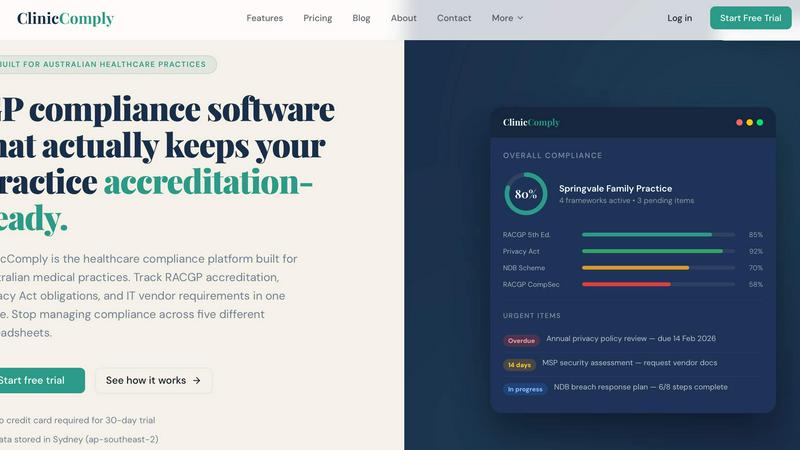
Clinic Comply is an intuitive healthcare compliance platform tailored specifically for Australian medical practices. It simplifies the complex landscape of healthcare compliance by providing a centralized hub for tracking crucial requirements such as RACGP accreditation, Privacy Act obligations, and IT vendor specifications. Designed to eliminate the hassle of managing compliance across multiple spreadsheets, Clinic Comply ensures that all your compliance documentation and progress are accessible in one location. This platform is ideal for general practitioners, clinic managers, and healthcare administrators looking to streamline their compliance processes. With Clinic Comply, you can maintain accreditation readiness while saving valuable time and reducing the risk of errors, ultimately allowing you to focus more on patient care.
About Skene
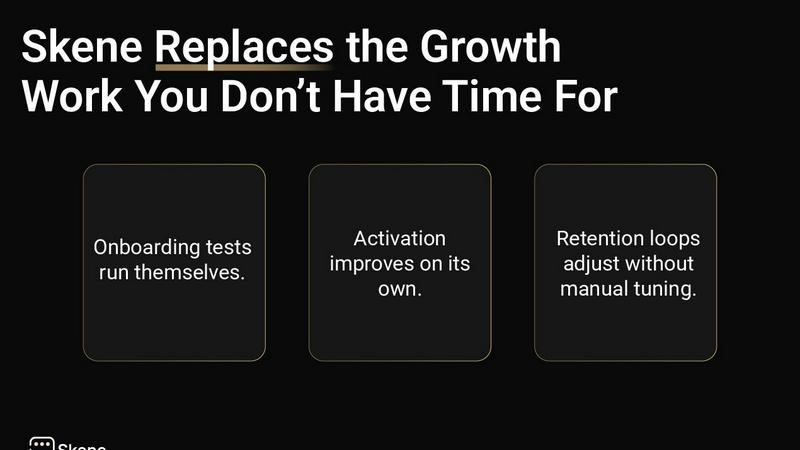
Alright, let's break it down. Skene is your product-led growth (PLG) wingman, but like, one that's actually useful and doesn't just nod along. It's built for the indie hackers, the scrappy startup squads, and the devs who are tired of the growth grind. You know the vibe: you ship an amazing product, but then you're supposed to also become a data scientist and a UX wizard to get people to actually use it? Nah. Skene automagically handles that whole circus. It's like a self-learning growth engine that plugs directly into your codebase. Instead of you pasting in janky third-party scripts that tank your performance and hide your data in some siloed dashboard you never check, Skene reads your actual code. It figures out where users are getting stuck, where they're bouncing, and then it just... fixes it. It creates better user flows, A/B tests them in the wild, and deploys the winner. So you can stop worrying about building a "growth stack" and get back to building your actual product. Growth becomes just another part of your code, something you own and can prompt, not a black-box SaaS you fight with.