
qtrl.ai vs Skene
Side-by-side comparison to help you choose the right AI tool.

qtrl.ai
qtrl.ai supercharges QA with AI agents for seamless testing while keeping your team in control and fully compliant.
Last updated: March 4, 2026

Stop pasting black box snippets and start shipping growth straight from your code.
Last updated: February 28, 2026
Visual Comparison
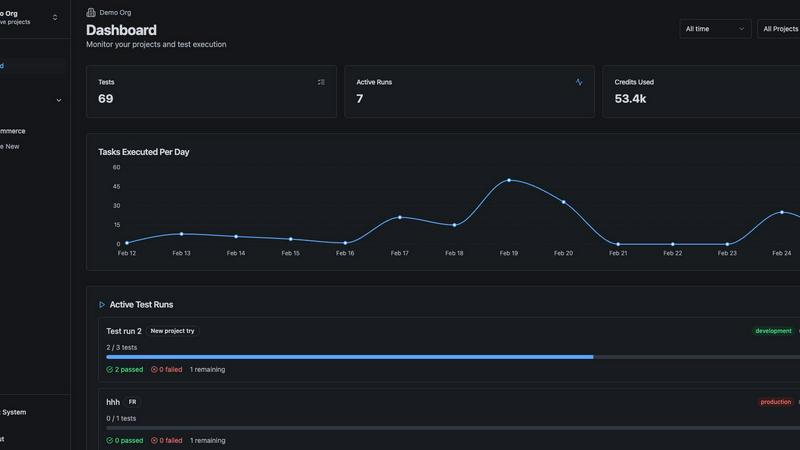
qtrl.ai
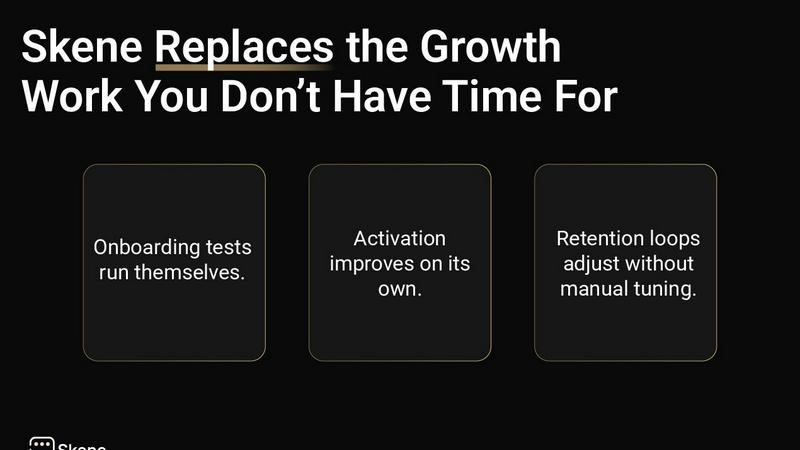
Skene
Feature Comparison
qtrl.ai
Autonomous QA Agents
Meet your new QA sidekick! These autonomous agents can execute instructions on demand or run continuously, scaling across environments like a pro. You set the rules, and they play by them, ensuring that all testing happens in real browsers—not some lame simulations.
Enterprise-Grade Test Management
Stay organized, folks! With centralized test cases, plans, and runs, you get full traceability and audit trails. Whether you’re in manual or automated workflows, qtrl.ai has your back, built specifically for compliance and auditability that enterprises crave.
Progressive Automation
Start easy-peasy with human-written instructions, then level up to AI-generated tests when you're ready. qtrl.ai even suggests new tests based on your coverage gaps, so you can review, approve, and refine everything before it hits the fan.
Adaptive Memory
This feature is like having a brainy buddy who remembers everything! qtrl.ai builds a living knowledge base of your application, learns from exploration, test execution, and issues, making test generation smarter and context-aware. The more you use it, the better it gets!
Skene
Codebase-Powered Signal Detection
Skene doesn't guess what your users are doing; it knows. It dives deep into your repository, reads the code, and automatically detects growth signals and friction points. Think of it as giving your app a full-body MRI to find exactly where the onboarding flow gets clunky or where a killer feature is being ignored. No more manual event tracking or hoping your analytics snippet fired correctly. The insights come straight from the source.
AI Context Layer & Prompt-Driven Growth
This is the secret sauce. Skene builds a live "context layer" of your entire product and user journey. This means you (or your AI coding agent) can just prompt it for growth tasks. Need to improve activation for a new feature? Just ask. It's like having a growth co-pilot in your IDE that understands your product's DNA. You own the logic, version it with Git, and prompt it like you would any other AI tool.
Self-Optimizing User Journeys
Once Skene spots a bottleneck, it doesn't just send you a report and peace out. It takes action. It automatically generates improved versions of user flows (like onboarding steps or feature discovery tours), runs them as experiments, and rolls out the winning variant. It's a set-and-forget growth loop that constantly tunes itself, freeing you from the endless cycle of build-measure-hypothesize manually.
IDE-Native & Developer-First
Skene lives where you live: in your terminal and your IDE (like Cursor). You run it with a simple command like uvx skene-growth analyze . and boom, you're in business. There's no external dashboard to context-switch to (unless you want one). You manage growth infrastructure with the same tools you use for your product code, keeping everything in sync and under your control.
Use Cases
qtrl.ai
Scaling QA Teams
Got a QA team stuck in the manual testing grind? qtrl.ai is here to help them scale their efforts seamlessly without losing control. It allows teams to transition from manual testing to automated workflows while maintaining high quality.
Modernizing Legacy Workflows
For companies looking to upgrade their legacy QA processes, qtrl.ai provides the perfect pathway. It helps introduce modern practices gradually, ensuring that teams can adapt without overwhelming changes.
Product-Led Engineering
If you’re part of a product-led engineering team, you’ll love how qtrl.ai packages test management, automation, and AI into one powerful platform. It lets you move faster and smarter while keeping oversight in check.
Compliance and Governance
Enterprises needing strict compliance and audit trails will find qtrl.ai an absolute gem. With built-in governance features, teams can ensure every test run is documented and traceable, giving peace of mind when it comes to audits.
Skene
Frictionless Onboarding for Indie Launches
You've just launched your solo dev project on Product Hunt. Traffic spikes, but users are bouncing after 30 seconds. Instead of panicking and manually building tours, you let Skene analyze the fresh codebase. It automatically identifies the confusing first step, generates a slick, contextual tooltip to guide users, and deploys it before your launch day is over. Time-to-value plummets, and conversions soar.
Startup Scaling Without a Growth Team
Your seed-funded startup is gaining traction, but you can't afford a dedicated growth team yet. Skene acts as your automated growth hire. It continuously monitors user activation flows, spots when a new cohort struggles with a recently shipped feature, and creates targeted in-app messages to drive adoption. You get scalable PLG tactics without the headcount.
Killing Legacy Analytics & Tour Bloat
You're fed up with your current stack of six different tools for analytics, user tours, and A/B testing. They're slow, break with every deploy, and cost a fortune. You replace the whole legacy mess with Skene. It consolidates signal detection, experimentation, and journey automation into one code-native package. Performance improves, costs drop, and you finally own your data.
AI-Agent Assisted Growth Hacking
You're deep in the agentic future, using AI to write code. Now, you can task your AI dev agent with growth work too. Because Skene provides a promptable context layer, you can tell your agent, "Hey, optimize the checkout flow for mobile users." The agent uses Skene's understanding of your app to draft, test, and implement the improvement autonomously.
Overview
About qtrl.ai
Alright, fam, let’s dive into the world of qtrl.ai, the ultimate QA platform that’s here to save the day for software teams battling the chaos of quality assurance. This bad boy is all about helping you scale your QA efforts without losing that sweet control or governance you need. Imagine a centralized hub where you can whip your test cases into shape, plan epic test runs, and trace requirements like a boss. With real-time dashboards, you can keep tabs on what’s been tested, what’s passing, and where the potential risks are lurking. And guess what? It’s not just another cookie-cutter solution. qtrl.ai combines enterprise-grade test management with powerful AI automation that gets smarter over time. Perfect for product-led engineering crews, QA teams ready to ditch the manual grind, or enterprises that need to stay compliant. Get ready to bridge the gap between the slow and steady manual testing and the crazy, brittle world of traditional automation. qtrl.ai is your ticket to faster, smarter quality assurance.
About Skene
Alright, let's break it down. Skene is your product-led growth (PLG) wingman, but like, one that's actually useful and doesn't just nod along. It's built for the indie hackers, the scrappy startup squads, and the devs who are tired of the growth grind. You know the vibe: you ship an amazing product, but then you're supposed to also become a data scientist and a UX wizard to get people to actually use it? Nah. Skene automagically handles that whole circus. It's like a self-learning growth engine that plugs directly into your codebase. Instead of you pasting in janky third-party scripts that tank your performance and hide your data in some siloed dashboard you never check, Skene reads your actual code. It figures out where users are getting stuck, where they're bouncing, and then it just... fixes it. It creates better user flows, A/B tests them in the wild, and deploys the winner. So you can stop worrying about building a "growth stack" and get back to building your actual product. Growth becomes just another part of your code, something you own and can prompt, not a black-box SaaS you fight with.
Frequently Asked Questions
qtrl.ai FAQ
What makes qtrl.ai different from other QA tools?
qtrl.ai stands out by blending enterprise-grade test management with a progressive AI layer. It allows teams to start with manual test management and gradually integrate intelligent automation, keeping control and transparency intact.
Is qtrl.ai suitable for small teams?
Absolutely! Whether you're a small startup or a large enterprise, qtrl.ai is designed to scale with your needs. Small teams can start simple and gradually adopt automation as they grow.
How does the adaptive memory feature work?
The adaptive memory feature builds a living knowledge base of your application by learning from test executions and issues. This makes it smarter over time, enhancing test generation and execution effectiveness.
Can qtrl.ai integrate with our existing tools?
Yes, it plays nicely with your current toolset! qtrl.ai supports CI/CD pipeline integration and requirements management, allowing teams to maintain their existing workflows while adding advanced QA capabilities.
Skene FAQ
How is Skene different from traditional customer experience software?
Traditional tools are like putting bandaids on the outside of your app. You manually build tours that break with every UI update, and your data is locked in a siloed dashboard. Skene is surgery from the inside. It reads your codebase so it always knows your app's structure, and it generates everything automatically. When you push new code, Skene's flows update themselves. No more brittle UI selectors or manual maintenance.
How long does it take to set up?
Literally 60 seconds, maybe less if your terminal game is strong. You just connect your GitHub/GitLab repo (read-only access is fine) or run the CLI command in your project root. Skene does a lightning-fast analysis of your code and spins up its growth engine. Zero code changes required to start. It's almost suspiciously easy.
Is my code secure?
For sure. We only ever ask for read-only access to your repo. The analysis happens in a secure, isolated environment. Your proprietary code doesn't get used for training models or any funny business. It's just to let Skene understand your app's structure so it can help you grow it. You keep 100% ownership.
What kind of analytics do you provide?
You get a dashboard that shows the real stuff: user progress in real-time, completion rates for key flows, engagement heatmaps, and where bottlenecks are forming. It's all about tracking time-to-value and measuring the impact of the optimizations Skene is running. It's actionable data, not just vanity metrics, so you can see what's actually moving the needle.
Alternatives
qtrl.ai Alternatives
qtrl.ai is a modern QA platform designed to help software teams scale their quality assurance efforts without sacrificing control or governance. It combines enterprise-grade test management with powerful AI automation, making it a go-to for those looking to boost their testing game. However, as with any tool, users often seek alternatives for a bunch of reasons—maybe it's price, features, or specific platform needs that just don’t line up. When hunting for an alternative, think about what features are non-negotiable for your team. Do you need robust automation? How about user-friendliness? Make sure the platform not only fits your budget but also scales with your team's evolving needs and keeps your workflow slick and efficient.
Skene Alternatives
Skene is your automated growth sidekick, a productivity tool that basically runs your product-led growth strategy on autopilot. It's for devs and startups who want to boost user onboarding and retention without building a whole growth team from scratch. People hunt for Skene alternatives for all the usual reasons. Maybe the budget's tight and they need a free plan, or their stack is built on something like Notion and needs a specific integration. Sometimes a team just outgrows the feature set and needs more advanced analytics or customization options. When you're shopping around for a different tool, keep your non-negotiables in mind. Think about your wallet, what platforms you absolutely need it to play nice with, and how much hand-holding you want versus how much control you need to tweak things yourself. The goal is to find something that fits your vibe without killing your productivity.