
Fusedash vs iGPT
Side-by-side comparison to help you choose the right AI tool.

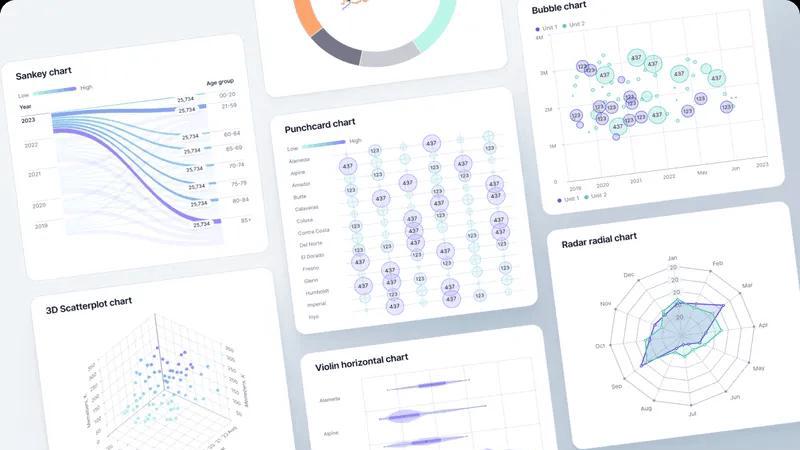
Fusedash transforms your raw data into slick dashboards and charts, making insights easy to spot and act on fast.
Last updated: March 4, 2026

iGPT gives your AI agents the real context from emails so they actually work.
Last updated: March 1, 2026
Visual Comparison
Fusedash
iGPT
Feature Comparison
Fusedash
Flexible Views
Fusedash lets you customize how your data is presented, catering to the needs of different teams. Whether it's a dashboard, chart, map, or narrative report, you can tailor layouts, filters, and time ranges to make sure stakeholders get exactly what they need without endless back and forth.
AI Chart Generator
Generate stunning visuals from your data in just minutes! Fusedash's AI chart generator takes your CSVs or API data, helps you choose the right chart type, and lets you add comparisons and clear labels. This means your charts will not only look good but also tell the right story.
Dashboard Software
Combine monitoring with context in one sleek workspace. Fusedash allows you to create dashboards that track KPIs while also providing narrative reports to explain changes and their significance. This storytelling feature keeps everyone aligned and reduces confusion, ensuring that everyone knows what’s up.
AI Chat
Not sure where to start? No worries! Fusedash's Smart Chat lets you ask questions in plain language and get immediate suggestions for metrics, charts, and breakdowns. This feature makes it easy to turn insights into shareable dashboard views, speeding up the decision-making process.
iGPT
One Unified Endpoint to Rule Them All
Forget stitching together a RAG pipeline from a dozen different services. iGPT replaces multi-endpoint retrieval chaos with one natural language request. You just ask a question like "What are the open action items?" and the API handles the entire pipeline: retrieval, context shaping, and reasoning, all in one call. No prompt chains, no tuning, just answers. It's the developer experience dream.
Thread Reconstruction & Attachment Processing
Email threads are a tangled mess across time, people, and files. iGPT automatically rebuilds those conversations, understanding who said what and when. Plus, it doesn't just ignore attachments; it processes them deeply, extracting text, data, and structure from PDFs, docs, and spreadsheets, so your AI gets the full picture, not just the email body.
Hybrid Retrieval That Actually Works
iGPT doesn't bet on just one search method. It uses a hybrid approach combining semantic understanding, keyword matching, and filters, all scored and reranked in a single call. This means it finds the relevant needle in the haystack, whether you're searching by concept, a specific phrase, or a person's name.
Context Shaping & Zero Data Retention
iGPT optimizes the context window for your LLM automatically, so you don't have to be a prompt engineering wizard. Even better, it's built with trust: it operates with zero data retention. Each inference is processed in memory, and your inputs, prompts, and outputs are never stored on their servers. Your secrets stay yours.
Use Cases
Fusedash
Marketing Campaign Tracking
Keep tabs on your marketing campaigns by utilizing Fusedash to create dashboards that show real-time performance metrics. You can visualize data trends and quickly adjust strategies based on what's working and what's not.
Sales Performance Monitoring
Sales teams can leverage Fusedash to track performance metrics across different regions or products. With customizable dashboards, you can visualize sales numbers, compare them against KPIs, and quickly identify areas for improvement.
Operational Efficiency Analysis
Operations teams can utilize Fusedash to monitor key performance indicators in real-time. By using storytelling features, you can provide context to the data, helping teams understand operational successes and challenges.
Financial Reporting
Finance departments can streamline their reporting processes with Fusedash. Create comprehensive dashboards that pull from multiple data sources, ensuring that stakeholders have access to accurate financial insights without the headache of manual reporting.
iGPT
The Ultimate Support Copilot
Rebuild a customer's entire story instantly, no matter how long the email chain. iGPT can pull context across months of back-and-forth, including attached support tickets and invoices, to give support agents or an AI copilot the full history and tone shifts, slashing resolution time.
Autonomous Sales & CRM Agents
Build deal-room bots that actually understand deal momentum. iGPT can extract key decisions, identify owners, track commitments, and analyze sentiment directly from email threads and attached contracts, giving your sales AI the context to prioritize and act without human babysitting.
Workflow Automation From Chaos
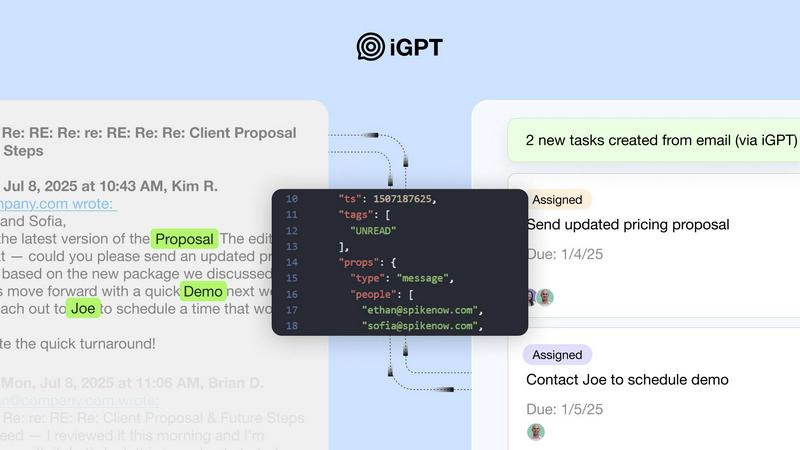
Turn messy email threads into structured tasks, deadlines, and approvals automatically. Flag what's stuck, identify missing sign-offs from attached PDFs, and create project tickets. It turns your inbox into an automated workflow engine without the manual slog.
Compliance & Audit Trail Clarity
Need to trace who approved what and when? iGPT creates an instant, citable audit trail. Find feedback, rationale, and official approvals by searching natural language across emails and attachments, making compliance reviews a breeze instead of a nightmare.
Overview
About Fusedash
Fusedash is like that magical toolbox you always wanted for your data! It's an AI-driven data visualization platform that helps teams convert their connected data into clear, actionable insights. Whether you're in marketing, operations, or leadership, Fusedash is designed to make your life easier by eliminating those frustrating manual reporting cycles and conflicting data stories. Imagine a unified workspace where you can whip up decision-ready dashboards, interactive charts, detailed maps, and narrative reports without the hassle of piecing together different tools. With Fusedash, you set your key metrics and KPIs once, and then use those definitions across all views and reports, ensuring everyone in your organization is on the same page with the same trusted numbers. It's not just about monitoring what's happening; it's about understanding why it's happening. Thanks to integrated AI features like natural language data chat and smart visualization assistance, Fusedash makes data exploration and reporting not just faster, but also way more accessible. Turn your raw data into a shared source of truth that drives alignment and action. Say goodbye to chaos and hello to clarity!
About iGPT
Let's be real: email is the chaotic, messy, beautiful beast where actual work gets done. It's also the place where most AI tools absolutely faceplant. Trying to get an AI agent to understand a sprawling email thread with attachments is like asking a goldfish to do your taxes. iGPT fixes that. It's the email intelligence API that finally gives your AI agents and workflows the context they desperately need. Think of it as the ultimate translator between your messy human communication and your clean, logical AI systems. Built for developers and enterprises building the next wave of agentic AI, iGPT is the cheat code for building AI that actually understands how work happens. The main flex? You skip all the painful stuff: no parsing, no chunking, no building your own vector stores. You just send a single, simple API call asking a question in plain English, and iGPT does the heavy lifting. It fetches, deeply understands, and shapes the context from your emails and attached docs, delivering a crisp, cited answer ready for your LLM to reason with. It's built for the builders of sales bots, deal analyzers, customer success automators, you name it. If you're tired of AI agents being clueless about your inbox, iGPT is your plug.
Frequently Asked Questions
Fusedash FAQ
How does Fusedash ensure data consistency?
Fusedash allows you to define your key metrics and KPIs once, which can then be reused across all views and reports. This ensures that every team in your organization is looking at the same trusted numbers, eliminating conflicting reports.
Can I integrate my existing data sources with Fusedash?
Absolutely! Fusedash lets you upload CSVs, connect APIs, and even enrich your datasets with public data. This flexibility means you can combine various data sources without having to rebuild your reports from scratch.
Is Fusedash user-friendly for non-technical users?
Definitely! Fusedash is designed to be intuitive and accessible. With features like the AI Chat, even those without a technical background can easily explore data, generate charts, and create dashboards without feeling overwhelmed.
What kind of support does Fusedash offer?
Fusedash provides various resources including demos, tutorials, and a knowledge base to help users get started. Their customer support team is also available to assist with any questions or issues you might encounter along the way.
iGPT FAQ
How do I get started with the iGPT API?
It's designed to be stupid simple. Grab your API key, check out the SDK and the live playground to test requests and responses. You can connect email sources and start asking questions in minutes. They even offer $10 in free credits to play with, no credit card required.
Is my company's email data safe with iGPT?
Absolutely. iGPT is built with enterprise-grade security. They have a strict zero-data training policy (your data never trains their models), OAuth-only processing with Role-Based Access Control (RBAC), and most importantly, zero data retention. Your data is processed in memory and never stored.
What kinds of file attachments can iGPT process?
iGPT is a beast at processing attachments. It can extract text and data from a wide range of documents including PDFs, spreadsheets (like Excel and Sheets), presentations, and Word docs. It understands the structure so your AI gets the context from inside the files, not just the filenames.
Can iGPT handle real-time, incoming emails?
Yes! iGPT features real-time ingestion, meaning it indexes new messages and attachments instantly as they hit your connected mailbox. This ensures the context it provides is always up-to-date, so your AI agents are working with the latest info, not yesterday's news.
Alternatives
Fusedash Alternatives
Fusedash is an AI-powered data visualization platform that transforms your raw data into slick dashboards and charts, making sure your squad can act on insights like a boss. It falls under the Analytics & Data and Business Intelligence categories, catering to teams that want to ditch the hassle of manual reporting and conflicting data stories. Users often search for alternatives when they feel like Fusedash might not fit their budget, lack specific features they need, or require compatibility with certain platforms. When hunting for an alternative, keep an eye out for pricing structures that align with your budget, essential features that meet your unique needs, and compatibility with your existing tools. It's all about finding a solution that keeps the vibe flowing and the insights rolling in without a hitch.
iGPT Alternatives
So you've heard about iGPT, the email intelligence API that's basically a cheat code for AI agents. It lives in the Business Intelligence world, but its real job is translating the chaotic mess of your inbox into clean, usable context for your AI workflows. It's the tool that stops your bots from faceplanting in long email threads. People hunt for alternatives for all the usual reasons. Maybe the pricing doesn't fit their startup budget, or they need a feature that's still on the roadmap. Sometimes a team is locked into a specific platform like Google Workspace and needs a native solution, or they want more hands-on control over the data pipeline instead of a magic one-call endpoint. When you're shopping around, don't just look at the sticker price. You gotta ask the real questions. Can it actually read your email threads and attachments, or does it just skim subject lines? How much manual setup and "prompt engineering" will your devs need to do? Most importantly, does it solve the core problem of giving your AI the real, messy context from where work actually happens, or is it just another layer of complexity?